Wood Pellets: Standardizing Production to Meet Market Demand
(Chinhphu.vn) – According to data from the Vietnam Timber and Forest Products Association (VIFOREST), in the first six months of 2025, Vietnam exported more than 3.9 million tons of wood pellets, reaching a value of USD 564.77 million—an increase of 33.3% in volume and 38.8% in value compared to the same period in 2024. However, behind these impressive figures, the industry is facing significant challenges, particularly in achieving long-term sustainable development.

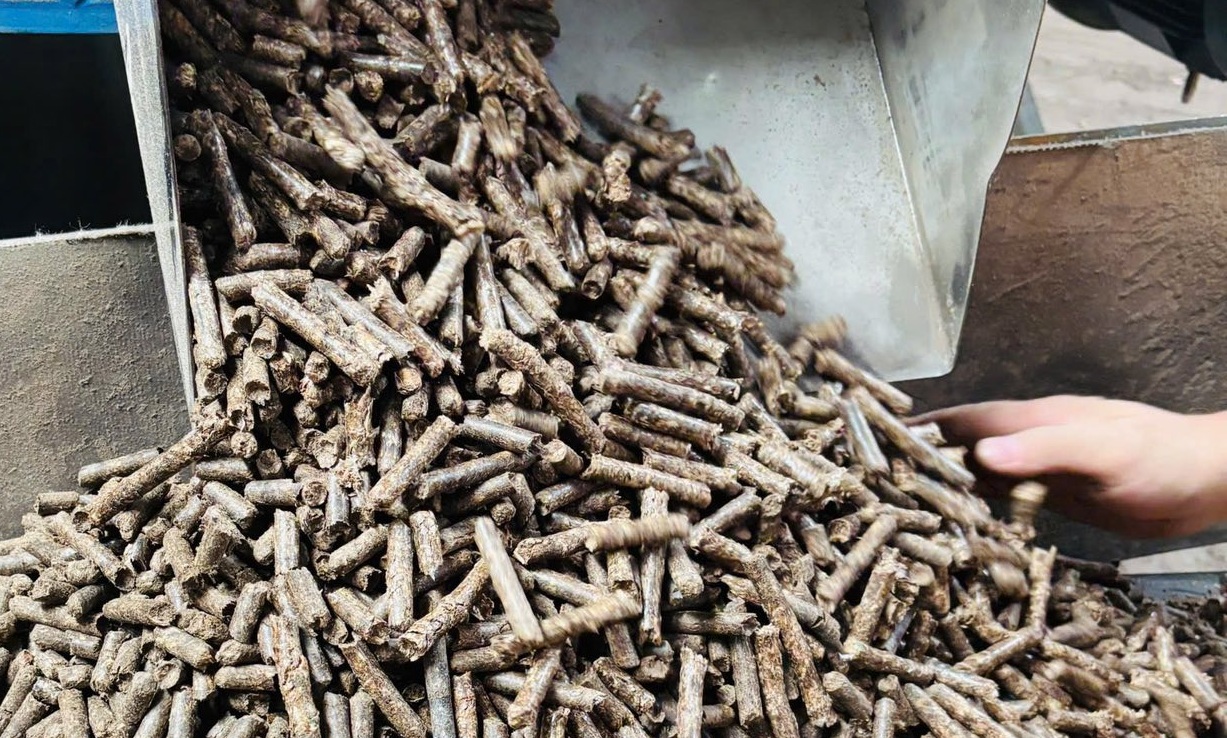
Illustrative image: Stringent requirements on quality and sustainability from export markets pose major challenges for Vietnam’s wood pellet production.
Strong demand in key export markets
Japan and South Korea continue to be the two primary export markets for Vietnam’s wood pellet industry. In 2024, Japan accounted for 60% of export volume and 65% of total export value, while South Korea contributed 34% in volume and 28% in value. Average export prices reached USD 144.3 per ton for Japan and USD 109.2 per ton for South Korea.
Notably, since September 2024, export prices to South Korea have increased significantly due to improved bidding prices and a shortage of raw materials in the wood processing sector. This indicates that demand in this market remains strong, despite increasing competitive pressure.
While heavy reliance on these two markets offers advantages in terms of geographical proximity and biomass energy incentives, it also poses risks, as demand may fluctuate depending on policy changes or global energy trends. The double-digit growth recorded in the first half of 2025 suggests that the industry is effectively capitalizing on rising demand for renewable energy, particularly as countries intensify efforts to reduce emissions.
According to Dr. To Xuan Phuc, a policy analyst at Forest Trends, although the wood pellet sector contributes nearly USD 1 billion annually to Vietnam’s wood export value, it continues to face serious structural challenges.
Major challenges facing the industry
One of the most pressing issues is the industry’s dependence on secondary raw materials sourced from other wood processing activities, rather than from dedicated plantation areas. This makes production vulnerable to seasonal fluctuations, raw material price volatility, and supply instability—especially as demand from Japan continues to grow.
Product quality remains another critical concern. Despite efforts by enterprises to reduce impurities, the presence of chemical residues and metal contaminants in wood pellets continues to pose significant challenges, largely linked to input materials. According to Mr. Nguyen Thanh Phong, Chairman of the Vietnam Wood Pellet Association, removing bark can help meet quality standards—particularly for the Japanese market—but it significantly increases production costs, exceeding current export prices (approximately USD 144 per ton), thereby making it difficult for businesses to maintain profitability.
In addition, increasingly stringent requirements from export markets regarding quality and sustainability are placing further pressure on producers. South Korea has recently tightened quality standards, pushing export prices upward, while Japan requires certifications such as FSC and PEFC and is gradually adopting SBP certification for low-emission supply chains. In the future, Japan may follow the European Union’s lead with regulations such as the EU Deforestation Regulation (EUDR), requiring strict traceability—something many Vietnamese companies are not yet fully prepared to meet.
Another key risk lies in the industry’s heavy dependence on Japan and South Korea, which together account for approximately 94–96% of total export volume and value. Any changes in policies or increased competition in these markets could place Vietnam’s wood pellet industry in a vulnerable position.
Finally, the lack of industry-wide coordination and long-term development strategy remains a significant weakness. The sector is currently characterized by a wide gap between large enterprises, which account for around 70% of exports, and smaller producers. Intense competition for raw materials and customers, along with price undercutting—particularly in the South Korean market—has driven prices to unsustainable levels, causing financial losses for many businesses.
Internal pressures and rising competition
Beyond internal challenges, Vietnam’s wood pellet industry is also facing increasing competition from emerging suppliers such as Thailand, Indonesia, and Malaysia. These countries offer higher-quality products at competitive prices, threatening Vietnam’s position in key markets like Japan and South Korea.
In the short term, long-term contracts help Vietnamese exporters maintain stability. However, in the long run, failure to improve product quality and meet sustainability standards may result in a loss of competitive advantage.
Price undercutting, especially in the South Korean market, has also negatively impacted the reputation of Vietnam’s wood pellet industry. In 2023, prices fell below production costs, pushing many companies into financial distress and creating unhealthy competition. This not only damages the industry’s image but also reduces the overall value of Vietnamese wood pellets compared to regional competitors.
According to Mr. Tran Quang Bao, Director General of the Forestry and Forest Protection Department under the Ministry of Agriculture and Environment, Vietnam’s forestry sector is currently promoting the development of high-value, deeply processed wood products, including furniture, laminated boards, plywood, particle board, MDF, wood pellets, and wood chips.
Wood pellet production aligns with Vietnam’s circular economy strategy, as it utilizes by-products from logging and wood processing—such as sawdust, branches, and residual wood materials—thereby maximizing the value of plantation forests.
In 2024, Vietnam and Japan signed a cooperation agreement in the forestry sector between the Forestry Department of Vietnam and the Japan Forestry Agency. The agreement includes provisions on sustainable forest management, legal timber supply, and trade, requiring that wood pellet production must be based on legally sourced raw materials in compliance with national regulations.
Toward a more sustainable future
Dr. To Xuan Phuc recommends that enterprises invest in developing their own raw material areas to reduce reliance on secondary supply sources and better meet requirements related to legality and sustainability. Some pioneering companies have begun adopting group forest certification models to access more demanding markets, although the higher costs require stable pricing and strong demand to be viable.
Building collaborative ecosystems among enterprises—where sustainable raw materials are shared across multiple product lines—could offer a practical solution for the industry.
At the policy level, stronger support measures are needed, including industry planning within the broader wood sector, incentives for biomass energy, and stricter control of unfair competition. These measures would help create a more sustainable development environment and enhance the competitiveness of Vietnamese enterprises both domestically and internationally.
Improving product quality, strengthening brand positioning, and diversifying export markets beyond Japan and South Korea—particularly toward regions such as the European Union—are essential strategic steps for Vietnam’s wood pellet industry to secure its long-term position in the global market.
Source: https://baochinhphu.vn/vien-nen-go-chuan-hoa-san-xuat-de-dap-ung-nhu-cau-thi-truong-102250711140753036.htm